From CIMI to CIMII
CIMI currently measures immigrant integration by comparing outcome gaps between immigrants and the Canadian-born across key areas of life. As the project evolves, the next step is to move from CIMI to CIMII: from measuring integration to also building a framework for measuring inclusion.
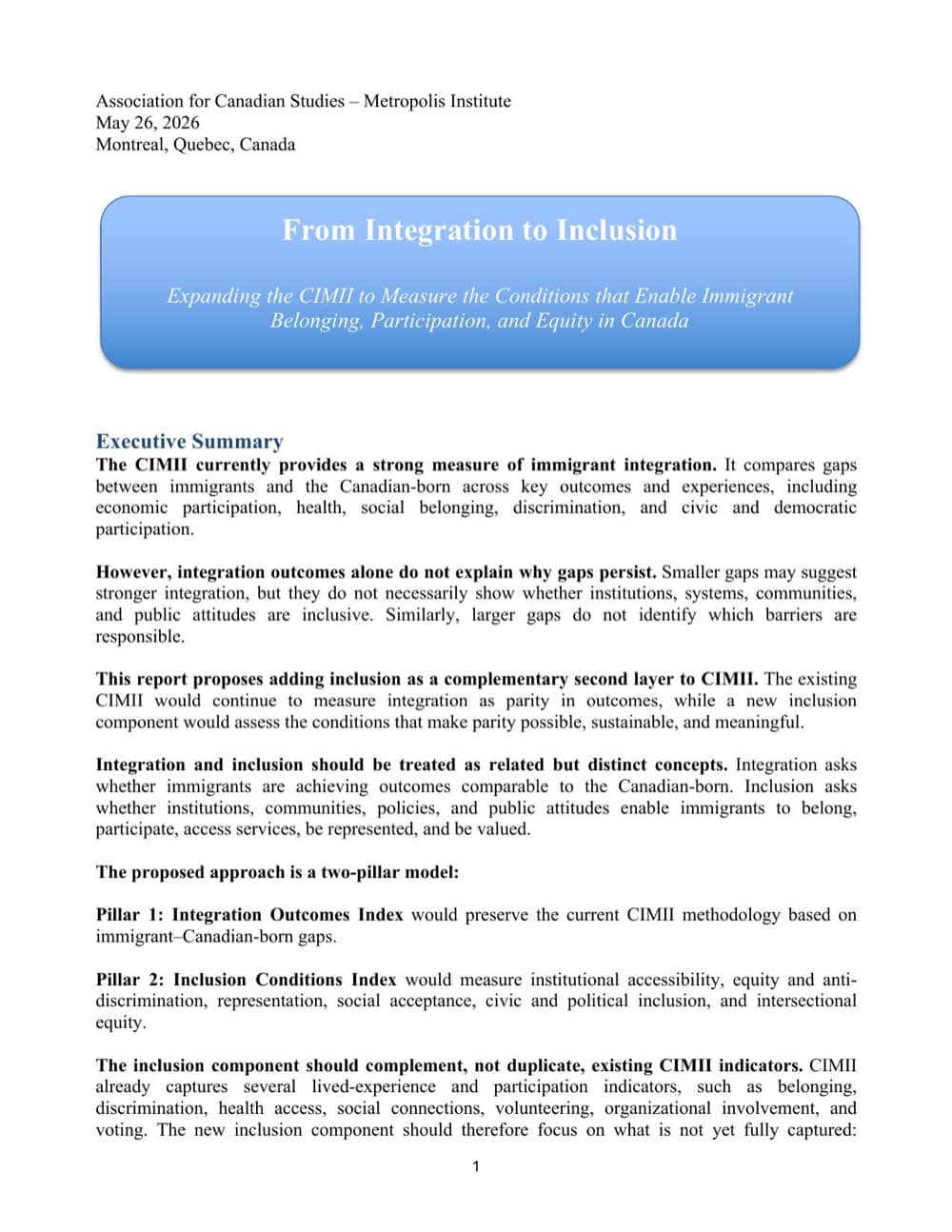
While integration focuses on whether immigrants are achieving comparable outcomes, inclusion asks a different but related question: are institutions, communities, policies, and public attitudes creating the conditions that make equitable outcomes possible? In this sense, inclusion helps us better understand the systems and environments that shape immigrant belonging, participation, representation, access, and equity.
The proposed direction is to develop a complementary Inclusion Conditions component alongside the existing Integration Outcomes Index. This new component would not replace the current CIMI methodology; instead, it would add a second lens focused on institutional accessibility, equity and anti-discrimination, representation, social acceptance, civic and political inclusion, and intersectional equity.
By combining integration outcomes with inclusion conditions, CIMII aims to provide a fuller picture of immigrant participation in Canada. We are currently working on a first draft of a possible Inclusion Index to test how this approach could be translated into measurable indicators. This work is still exploratory, but it represents an important step toward understanding not only where integration gaps exist, but also whether Canadian communities and institutions are structured to make parity, belonging, and opportunity possible.